
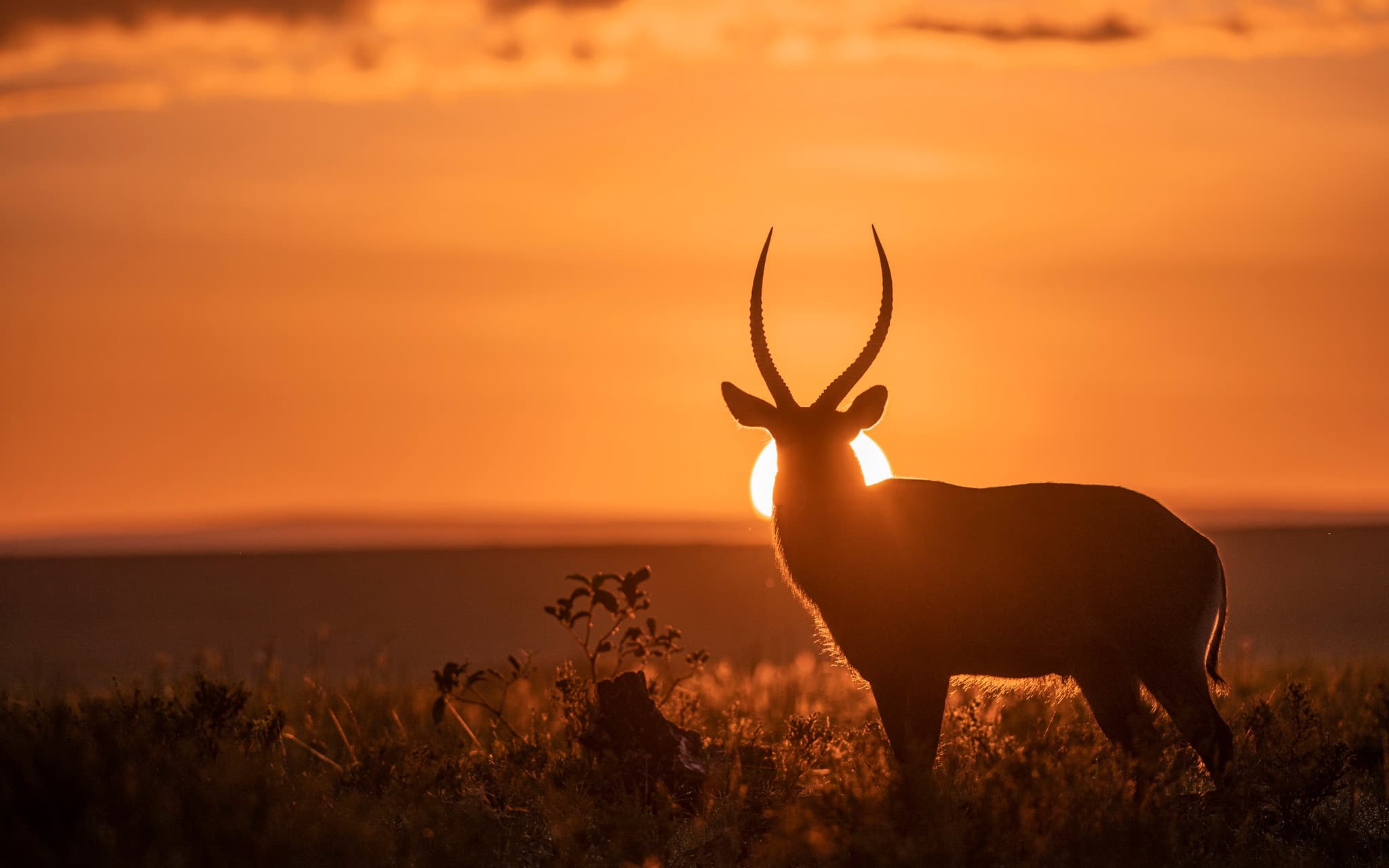

People sometimes ask me why I built a company around East Africa specifically. The honest answer is that I have not found anywhere else on the planet that does what this region does — and I have looked.
I grew up in Nairobi. I drove past Nairobi National Park on the way to school. The idea that lions and rhinos and giraffe existed twenty minutes from traffic lights was, for a long time, simply normal to me. It took a career guiding international travellers to understand how extraordinary that normalcy is — and how rare the ecosystem behind it remains in a world that is losing wild places faster than it is gaining them.
Scale that exists nowhere else
East Africa has the largest intact savannah ecosystem in the world. The Serengeti-Mara alone covers over 30,000 square kilometres of connected habitat that the Great Migration — 1.5 million wildebeest and their accompanying predators — circles continuously, year after year. This is not managed wildlife. It is not a reserve in the sense that most reserves are. It is a functioning, self-sustaining ecosystem that has operated on its own terms for millions of years and still does today.
When you drive into the Masai Mara at dawn, you are not visiting a place where wildlife was reintroduced or protected in a small fenced enclosure. You are entering a landscape that was always like this, and has simply not yet been destroyed. That is increasingly rare in the world, and it creates an atmosphere — a quality of wildness — that no amount of lodge design or curated experience can replicate.
Diversity across four countries
No other region of comparable size offers the diversity of experience that East Africa does. Within a two-week trip you can be on the open plains of the Masai Mara watching a cheetah hunt at dawn, sitting in dense rainforest an arm's length from a mountain gorilla, looking down from the rim of Ngorongoro Crater at the densest wildlife population on the continent, and finishing on the white sand of Zanzibar. These are not superficially different experiences. They are genuinely different ecosystems, different fauna, different geology, different human cultures — placed within close flying distance of each other.
The people who make it work
I am biased, but I believe East Africa has the finest safari guides in the world. The men and women who grew up adjacent to these ecosystems — who learned animal behaviour from parents and grandparents who had no choice but to understand it — bring a depth of knowledge that no qualification or training programme can fully replicate. When Joseph, one of our senior guides, reads the direction a pride is heading from a kilometre away by the angle of an impala's ears, he is drawing on something that runs much deeper than expertise. The guides are the reason travellers come back.
Why now matters
East Africa's ecosystems face real pressures: climate variability, land-use change, human-wildlife conflict, the slow encroachment of agriculture at protected area boundaries. The wild spaces that make these trips possible are not guaranteed to look the same in fifty years. I believe that responsible tourism — tourism that pays for conservation directly and funds local communities who have a reason to protect wildlife — is one of the most powerful arguments for keeping these places intact.
Every trip we run is, in a small way, a vote for East Africa remaining wild. That is not marketing language. It is how the economics of conservation actually work, and why I believe the trip you take matters beyond the memories you bring home.
There is nowhere else on Earth that offers what East Africa offers. I am not objective about this. But I have spent my career checking.
If you are considering East Africa for the first time, I am glad to answer any question personally. Write to us →

Comments
Leave a reply
Your email address will not be published. Required fields are marked *. Please keep discussions respectful — see our community guidelines.