
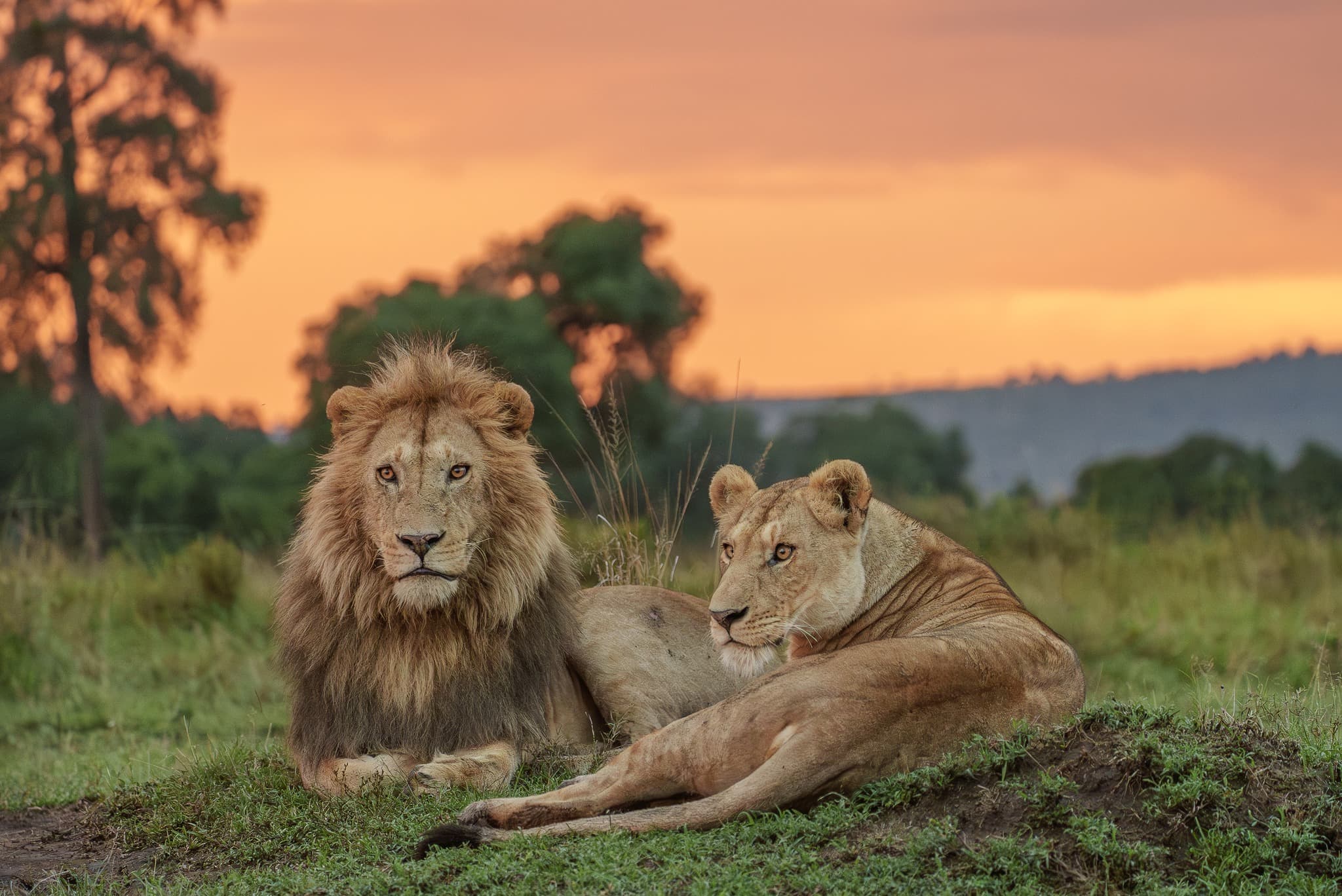

The Masai Mara and the Serengeti are, ecologically speaking, one single system — the 30,000-square-kilometre Serengeti-Mara ecosystem that the Great Migration travels in an annual circuit. The Kenya-Tanzania border that divides them is a political line, not a wildlife boundary. But for a safari traveller choosing between them, that border produces some meaningful differences in cost, landscape, visitor numbers and logistics.
Size
The Serengeti is enormous — over 14,000 square kilometres, making it approximately seven times the size of the Masai Mara's 1,510 square kilometres. In the Serengeti, it is possible to drive for an hour without seeing another vehicle. In the Mara during peak season, certain crossing points attract dozens of vehicles at a time. If space and solitude matter to you, the Serengeti offers more of both — particularly in the northern, western and southern zones well away from the central Seronera hub.
Wildlife access
The wildlife density in both parks is extraordinary. The Mara's compact size means that game drives cover ground efficiently — in a three-day stay you can cross the reserve several times and cover most of its major habitats. The Serengeti's scale means you need more time and, ideally, flights between camps to see different zones properly.
Both parks have the Big Five. The Mara has one of the highest lion densities in Africa. The Serengeti's northern zones have comparable big-cat populations with fewer vehicles. The Serengeti's Ndutu area in the south is the world's best destination for calving season (January–February).
The migration question
The migration arrives in the Masai Mara from July and leaves in October. It is present in the Serengeti for the remaining eight months of the year, in different zones and in different phases. If the river crossings are your primary goal, you must be in the Mara between July and October. For the calving season and the Grumeti crossings, you must be in Tanzania.
Cost
The Masai Mara is generally more affordable. Kenya's park fees are lower than Tanzania's. Comparable accommodation typically costs less on the Kenyan side. For budget and mid-range travellers, the Mara offers more value per day than the Serengeti.
The private conservancy factor
The Masai Mara has a significant advantage that the Serengeti cannot match: the private conservancies surrounding the national reserve. These community-owned lands — Olare Motorogi, Naboisho, Mara North and others — have strict vehicle limits, allow off-road driving, and permit walking safaris and night drives that are not available inside the national reserve. The conservancies are where the most exclusive, least crowded Mara experience happens, and they have no equivalent on the Tanzanian side.
The Serengeti is larger, wilder and more expensive. The Mara is more accessible, better value and has the private conservancies. The right answer depends entirely on what you want.
Which should you choose?
- The Masai Mara for: the river crossings (July–Oct), private conservancy access, better value, shorter trips.
- The Serengeti for: calving season, scale and solitude, the full migration circuit, photographers wanting space.
- Both for: the complete migration story and the deepest wildlife experience in Africa.
We run safaris in both parks and know both ecosystems intimately. See the Kenya–Tanzania combination packages →
Comments
Leave a reply
Your email address will not be published. Required fields are marked *. Please keep discussions respectful — see our community guidelines.