
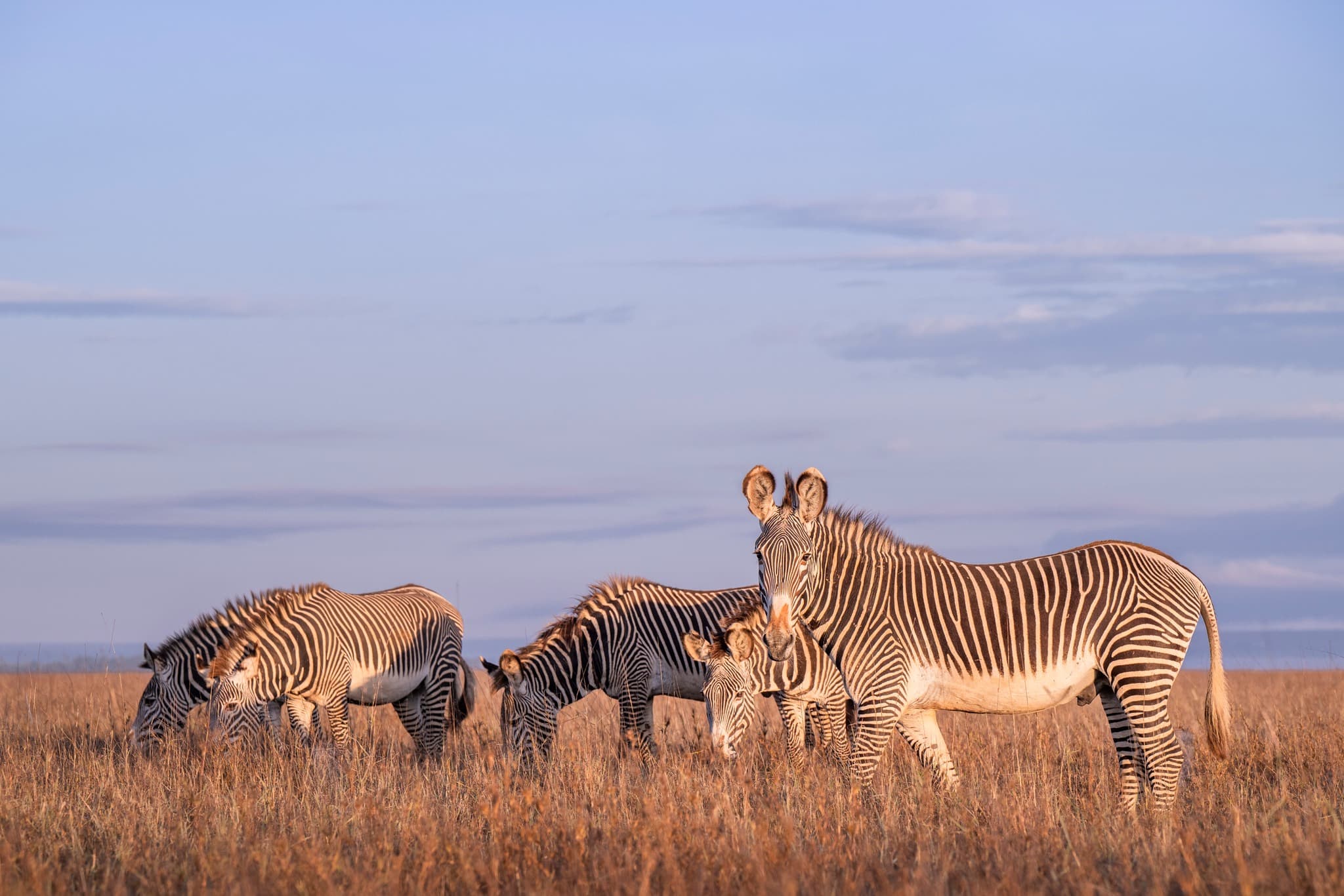

The Great Migration is the largest overland wildlife movement on Earth. Each year, roughly 1.5 million wildebeest, 300,000 zebra and half a million gazelle follow a circular route across the Serengeti ecosystem in Tanzania and the Masai Mara in Kenya — driven entirely by rainfall and the fresh grass it produces.
It has no start and no finish. The herds are always moving, always somewhere on the circuit. What changes month by month is where they are, and what dramatic event is unfolding around them.
The four chapters of the migration
January–March: calving season
The herds gather on the short-grass plains of Ndutu and the southern Serengeti. Wildebeest drop around 8,000 calves a day at peak calving in February. The plains fill with newborns and every predator in the ecosystem — cheetah, lion, hyena, wild dog — knows the calendar. The density of predator action during calving rivals anything the migration produces.
April–June: the northward drift
The long rains push the herds north and west through the central and western Serengeti. This is the quietest tourist season — lower prices, fewer vehicles — but the herds are moving and the predator action continues. The Grumeti River crossings in May and June are the precursor to the famous Mara crossings.
July–October: the Mara River crossings
The herds reach the Mara River. Nile crocodiles have been waiting. The crossings are chaotic, dangerous and extraordinary: thousands of animals stampeding into the water, the surface churning, crocodiles attacking from below. This is the event most people picture when they hear "Great Migration." Crossings happen at different points along the river, multiple times each week, from July through October.
November–December: the return south
Short rains green the southern Serengeti again and the herds drift back, completing the circle. Calving season is approaching and the cycle begins again.
Where to see it
- Serengeti, Tanzania — the herds spend most of the year here. Every part of the park hosts action at some point in the calendar.
- Masai Mara, Kenya — the river crossings from July to October. International attention focuses here, but the Mara is on the route for only a quarter of the year.
- Ndutu, Tanzania — the best destination for calving season (January–February). Fewer visitors, extraordinary predator action, lush landscapes.
The most common mistake is treating the migration as a single event. It is a year-long cycle, with a different kind of spectacle at every stage.
Is it worth building a trip around?
Yes — but not only in the way most people imagine. The river crossings are spectacular, but calving season in the south produces more predator action per hour than almost anywhere else in Africa. If you want the crossings, aim for August–September. If you want intensity without the crowds and the cost, go to Ndutu in February.
We design migration itineraries around where the herds actually are, not where the marketing says they should be. See our Tanzania safaris →
Comments
Leave a reply
Your email address will not be published. Required fields are marked *. Please keep discussions respectful — see our community guidelines.